


Microsoft Fabric vs Power BI Australia is one of the biggest questions beginners in Australia are asking in 2026. If you are trying to break into data analytics and you keep seeing Power BI, dashboards, Microsoft Fabric, AI, and business intelligence mentioned together, it is easy to feel overwhelmed. The good news is that you do not need to learn everything at once. In most cases, the best path is much simpler than people think.
For most new learners, Microsoft Fabric vs Power BI Australia is not really a battle where one tool completely replaces the other. It is more about understanding which one gives you the strongest starting point. If you are based in Sydney, Melbourne, Brisbane, Perth, Adelaide, or Canberra and you want practical, job-ready analytics skills, Power BI is usually the easier first step. Microsoft Fabric matters too, but it makes more sense once you already understand reporting, dashboards, and how data supports business decisions.
Why Microsoft Fabric vs Power BI Australia matters in 2026
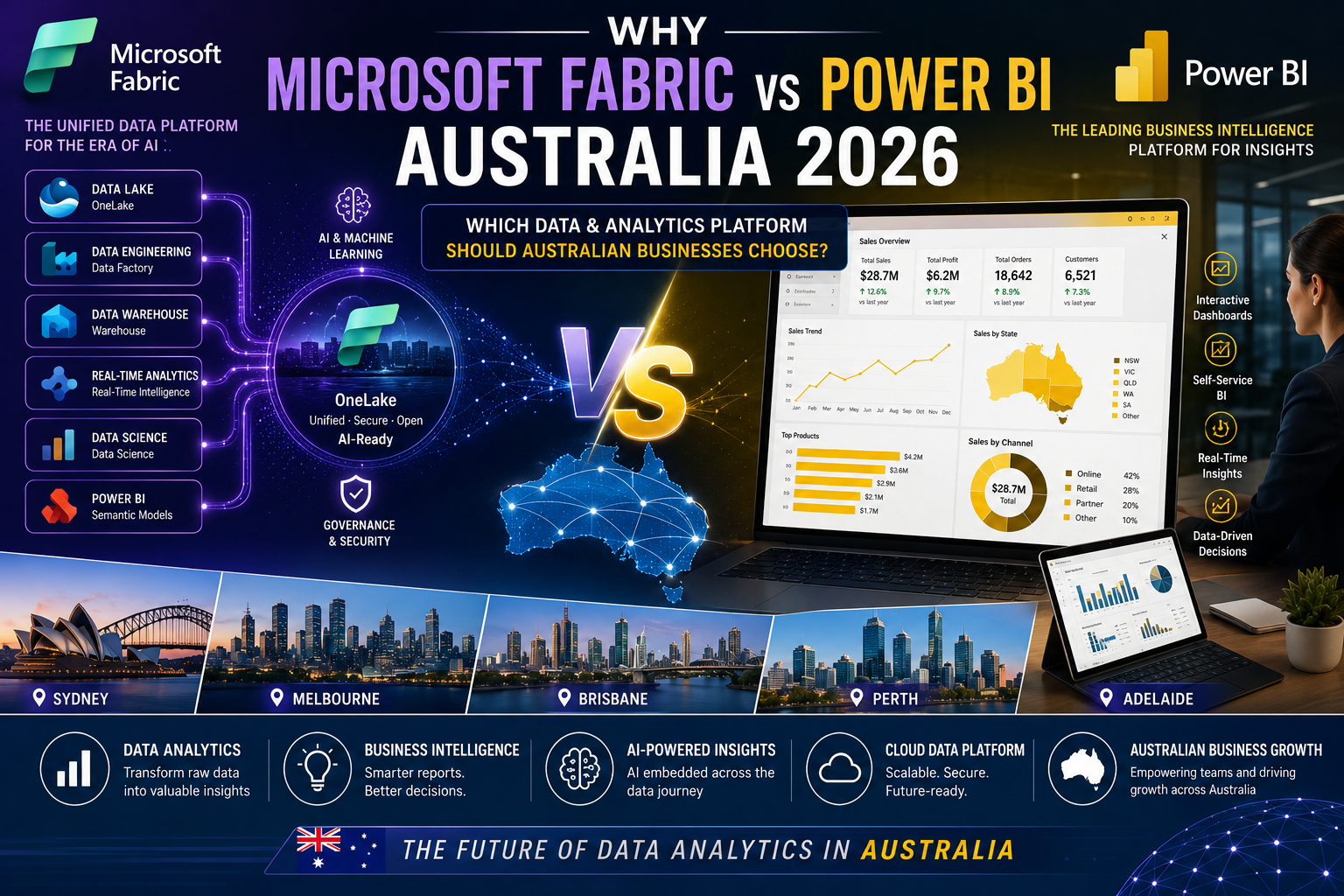
The reason Microsoft Fabric vs Power BI Australia matters so much is that the data analytics space is changing quickly. Beginners are no longer just hearing about Excel, SQL, and Power BI. They are also hearing about unified analytics platforms, AI-assisted reporting, and Microsoft Fabric. That creates confusion, especially for career changers and first-time learners who simply want to know what will help them build confidence fastest.
Across Australian workplaces, data skills are becoming more practical and more visible. Businesses want people who can organise information, build reports, explain trends, and support decision-making with data. If you are looking at data analytics pathways in Melbourne, Sydney, Brisbane, Perth, Adelaide, or Canberra, the first challenge is not becoming an expert in an entire analytics platform. The first challenge is learning how to work with data in a way that makes sense to real teams and real managers.
What Power BI is and why beginners like it
Power BI is Microsoft reporting and data visualisation tool. It helps users connect data, shape it, build dashboards, and create reports that people can actually use. For beginners, Power BI is often easier to understand because the results are visible very quickly. You can import a dataset, create charts, filter information, and build a simple dashboard that answers a real business question.
That quick feedback matters. When people first start learning analytics, they usually need a tool that helps the subject feel practical rather than abstract. A learner in Sydney might want to build a business report. A job seeker in Melbourne may want a portfolio dashboard. Someone in Brisbane may be trying to understand KPIs and trend lines for the first time. In Perth or Adelaide, a working professional might want to upskill without diving straight into a full enterprise analytics platform. In all of these situations, Power BI feels like a strong first milestone.
What Microsoft Fabric is in simple terms
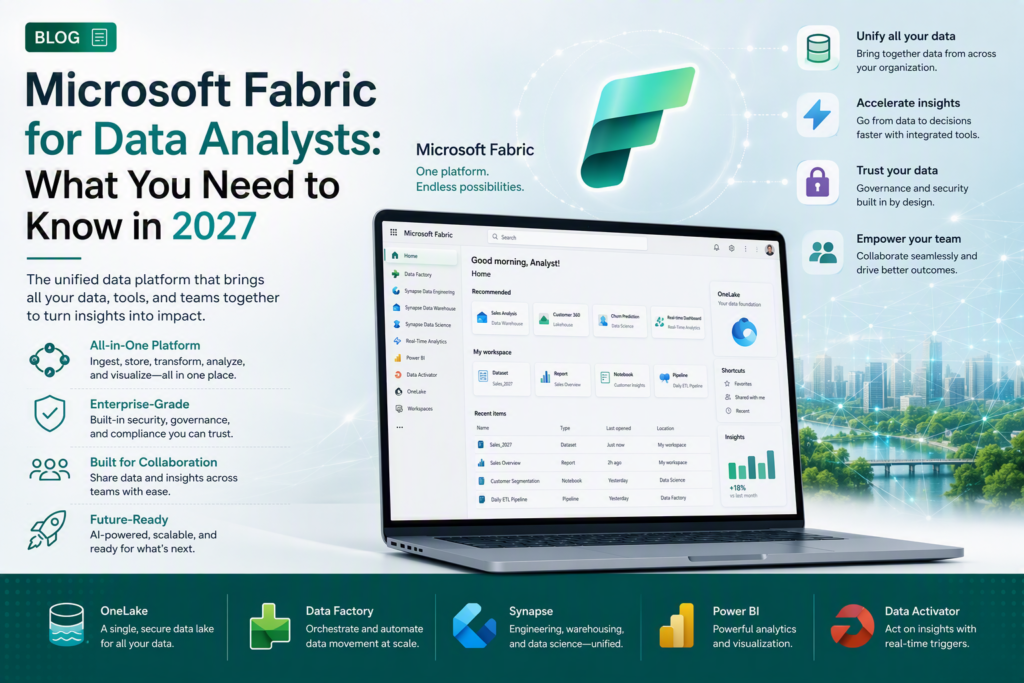
Microsoft Fabric is broader than Power BI. Instead of focusing mainly on reports and dashboards, it brings together a wider analytics environment. That means Fabric is more about the bigger picture of how organisations manage, prepare, analyse, and work with data across multiple workloads. Power BI sits inside that wider ecosystem, which is why people are increasingly seeing both names together.
This is where Microsoft Fabric vs Power BI Australia becomes important to explain clearly. Power BI helps beginners learn how to turn data into usable insight. Microsoft Fabric helps more advanced learners understand how that reporting fits into a larger modern analytics environment. If you start with Fabric before understanding the basics, it can feel like trying to run before you can walk. If you start with Power BI first, then Fabric becomes much easier to understand later.
Microsoft Fabric vs Power BI Australia: what is the real difference?
The easiest difference is this: Power BI is usually the better choice when your main goal is reporting, visualisation, and dashboard building. Fabric is the better concept to explore when you are ready to understand the wider data platform around reporting.
That is why Microsoft Fabric vs Power BI Australia should not be framed as a winner-takes-all comparison. For beginners in Australia, the smartest path is usually Power BI first, then Fabric concepts second. This gives you a practical entry point without losing sight of where modern analytics is heading.
Why Power BI should usually come first in Australia
For most beginners, Power BI should come first because it feels closer to the work many employers actually expect at an entry level. Teams across Sydney, Melbourne, Brisbane, Perth, Adelaide, and Canberra often need reporting support, dashboards, summaries, and visual analysis before they need someone to understand a broad enterprise analytics architecture.
If you are just entering the field, there is a good chance you will benefit more from learning how to clean a dataset, connect tables, design a dashboard, and explain a trend than from trying to understand every layer of a larger analytics environment on day one. That is why Microsoft Fabric vs Power BI Australia usually leads to the same practical advice: start with Power BI if you are new, then expand into Fabric once the basics are comfortable.
Where Microsoft Fabric becomes valuable
Once you understand reporting fundamentals, Microsoft Fabric becomes much more meaningful. At that point, you are no longer just asking how to build a dashboard. You are asking bigger questions. How does the reporting layer connect to the wider data environment? How do modern analytics teams work across multiple tools and workloads? How are AI-supported experiences affecting reporting and data exploration?
This is where Fabric starts to feel useful rather than overwhelming. A learner in Canberra working with government-style data projects, a professional in Melbourne moving deeper into business intelligence, or someone in Sydney progressing beyond entry-level reporting may all reach a point where Fabric concepts become the next logical step. That is why Microsoft Fabric vs Power BI Australia is best understood as a learning sequence, not just a comparison.
How AI is changing Microsoft Fabric vs Power BI Australia
Another reason Microsoft Fabric vs Power BI Australia is trending is that AI is now part of the conversation around analytics tools. Microsoft has continued to expand Copilot and AI-related experiences in Power BI and Fabric, which means learners are hearing more about AI-supported analytics, smarter reporting workflows, and faster ways of working with data.
Even so, beginners should not let the AI angle push them into skipping the fundamentals. AI can help people move faster, but it does not remove the need to understand what a good report looks like, how filters change results, or why a model needs to make sense. The strongest path in 2026 is still to build core confidence first, then layer AI and broader platform understanding on top.
Best learning path for beginners in Australian cities
If you are in Sydney, Melbourne, Brisbane, Perth, Adelaide, or Canberra and trying to plan your learning path, here is a practical order that works well for many beginners:
- Start with data basics and spreadsheets so you understand rows, columns, structure, and simple analysis.
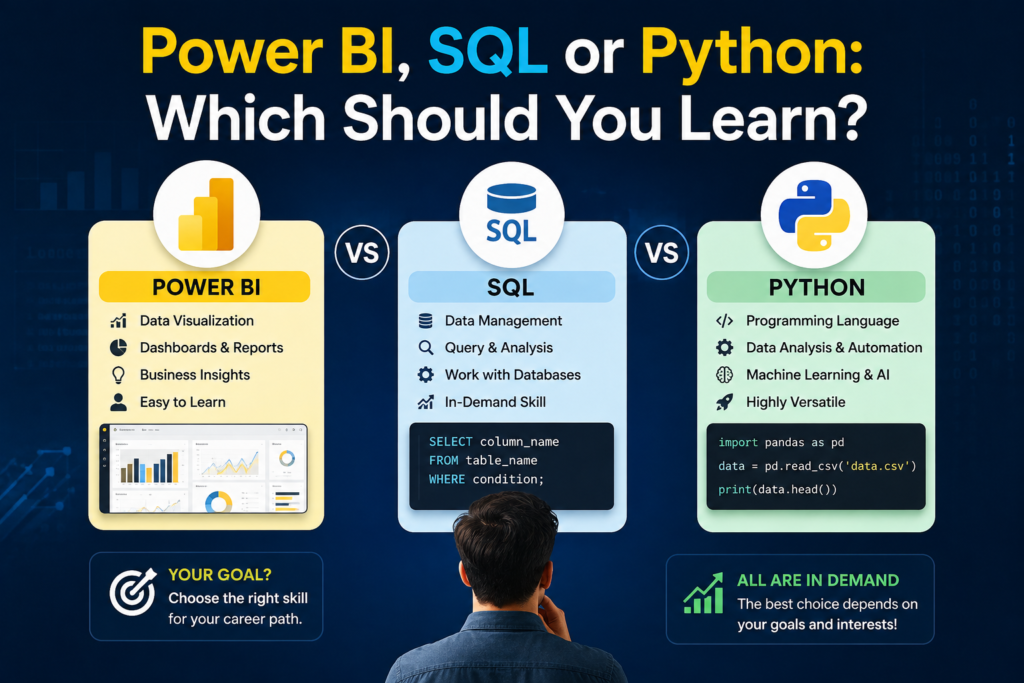
- Learn SQL so you can query structured data and understand how information is stored and retrieved.
- Learn Power BI so you can build dashboards, reports, and visual stories from real data.
- Explore Microsoft Fabric once you are comfortable with reporting and want to understand the broader analytics ecosystem.
- Move into advanced topics such as cloud analytics, larger platform concepts, or deeper data modelling when you are ready.
This path keeps the learning process realistic and avoids overwhelming beginners too early.
Final thoughts on Microsoft Fabric vs Power BI Australia
If you are still wondering what to do with Microsoft Fabric vs Power BI Australia, keep it simple. If you are new to data analytics in Australia, start with Power BI. It is easier to understand, easier to practise with, and easier to connect to beginner-level reporting tasks. Once you have that foundation, Microsoft Fabric becomes far more useful because you can place it in context.
So the best answer to Microsoft Fabric vs Power BI Australia is not Power BI or Fabric as if one must eliminate the other. The better answer is Power BI first, Fabric next. For beginners across Sydney, Melbourne, Brisbane, Perth, Adelaide, and Canberra, that is usually the most human, practical, and confidence-building way to learn data analytics in 2026.
Frequently Asked Questions About Microsoft Fabric vs Power BI Australia
Should beginners in Australia learn Power BI or Microsoft Fabric first?
Most beginners should start with Power BI first because it is easier to understand and more directly tied to dashboards, reports, and business analysis.
Is Microsoft Fabric replacing Power BI?
No. Power BI remains an important part of Microsoft’s broader analytics ecosystem, while Fabric represents a larger platform around data and analytics.
Why is Microsoft Fabric vs Power BI Australia important in 2026?
It is important because more learners are seeing both tools mentioned together and want to know which one is the better first step for practical job-ready skills.
Is Power BI still worth learning in Sydney, Melbourne, and Brisbane?
Yes. Power BI remains one of the most useful analytics tools for reporting, dashboards, and business intelligence work across Australian cities.
Is Microsoft Fabric too advanced for complete beginners?
For many complete beginners, yes. Fabric becomes much easier to understand once you already know reporting and dashboard fundamentals.
Which cities should this topic target for local SEO?
Sydney, Melbourne, Brisbane, Perth, Adelaide, and Canberra are all strong city targets for Australian data analytics training content.
Do I need SQL before learning Power BI?
Not always, but SQL is a helpful skill that strengthens your overall analytics foundation.
Can AI replace the need to learn Power BI or Fabric properly?
No. AI can speed up parts of the workflow, but learners still need to understand reporting, data structure, and business context.