


Data analytics skills are no longer a nice extra at the bottom of a résumé. In 2026 they are one of the clearest reasons an Australian employer will offer one candidate a higher salary than another. Every business already sits on data: sales records, customer histories, website traffic, stock levels, service tickets. What most businesses don’t have is enough people who can look at that pile of numbers and say, “Here is what we should do next, and here is why.”
That gap between having data and acting on it is where the money is. This guide explains why companies pay a premium for people who turn data into decisions, which data analytics skills carry the most weight, how demand looks in Sydney, Melbourne, Brisbane, Perth, Adelaide and Canberra, and how you can build a profile that employers take seriously. If you are new to the field, the data analytics courses at Data Analytics Courses Australia are a good place to see what a structured pathway looks like.
What Does “Turning Data Into Decisions” Actually Mean?
It helps to be blunt here, because this phrase gets thrown around a lot. Turning data into decisions doesn’t mean building a pretty chart. It means taking a business question, finding the right data, cleaning it, analysing it, and then explaining the answer so clearly that a manager can act on it by Friday.
A retail manager asks, “Why did our margins drop in Queensland last quarter?” Someone with strong data analytics skills pulls the sales and supplier data with SQL, spots that freight costs jumped on three product lines, builds a short Power BI report, and recommends renegotiating two supplier contracts. The decision is made. The saving is real. That person just paid for their own salary and then some.
Someone who can only export a spreadsheet and hand it over is doing useful work, but the decision still sits with somebody else. Employers notice the difference, and they pay for it.
Why Businesses Pay More for Data Analytics Skills
1. They Replace Expensive Guesswork
Bad decisions are costly. A wrong pricing move, a marketing budget spent on the wrong channel, or a hiring plan built on hunches can burn six figures before anyone realises. A skilled analyst tests the idea against real numbers first. Leaders quickly learn that paying for one strong analyst is cheaper than paying for one avoidable mistake.
2. They Find Money That Is Hiding in Plain Sight
Most organisations leak money in ways nobody has measured: customers who quietly churn, products that sell but lose money after returns, ad spend that never converts. Analysts find these patterns. When a finding turns into a saving or a new revenue stream, the business can point to a dollar figure. That is a very easy case to make when salary reviews come around.
3. They Save Senior People Hours
Executives don’t have time to dig through raw tables. A person who can deliver a clear dashboard and a two-line recommendation gives leaders their afternoon back. In a busy team, that time saving is worth a lot, and it is a big reason analysts who communicate well move up faster than those who only work in the background.
4. The Skill Mix Is Still Hard to Find
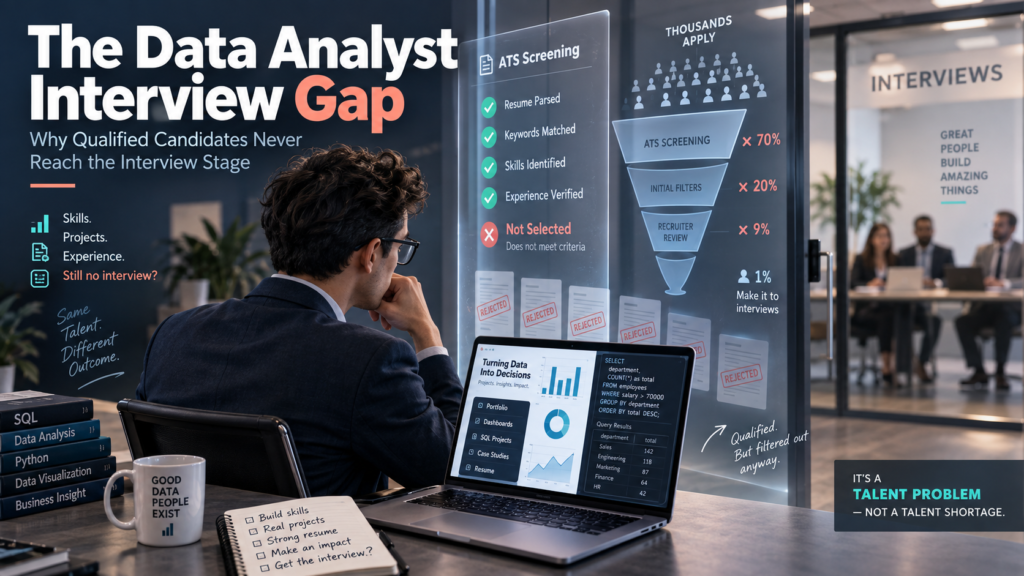
Plenty of people can click through a Power BI tutorial. Far fewer can combine SQL, data modelling, business understanding and confident communication in one role. Data analytics skills that are scarce get priced higher, and this combination is still scarce. The recent posts on our blog about the skills employers expect from data analysts and the data analyst interview gap both come back to this point.
5. They Connect Technical Teams and Business Teams
Every company has people who understand the systems and people who understand the customers, and they often talk past each other. An analyst who speaks both languages reduces rework, missed deadlines and confusion. That translation role is quietly one of the most valuable jobs in a modern workplace.
Report Builders vs Decision Makers: Where the Pay Gap Comes From
Employers rarely pay more for a tool. They pay more for what the person does with the tool. Here is how the two profiles usually compare.

| Area | Report Builder | Decision Maker |
| Starting point | Waits for a request | Starts with a business question |
| Data handling | Uses clean, ready-made files | Cleans and joins messy data with SQL |
| Output | Charts and tables | Recommendation with supporting evidence |
| Communication | Sends the file | Explains what to do and why it matters |
| Business impact | Hard to measure | Linked to savings, revenue or risk |
| Typical pay direction | Entry level | Higher, with faster progression |
Data Analytics Skills Employers Pay Extra For
Job ads change, but the same core data analytics skills keep showing up in the roles that pay well. If you are deciding what to learn first, this is a sensible order.
- Nearly every serious analytics role needs it, because the data you need lives in databases. Our SQL for Data Analysis (Beginner) course is built for people starting from zero.
- Power BI and dashboard design. Turning raw tables into a report a manager actually opens. Start with Power BI Fundamentals and move to Advanced Power BI Modelling when you are ready for relationships, DAX and performance.
- Still everywhere. Strong Excel skills make you faster at checking, cleaning and sense-testing data before it goes into a dashboard.
- Cloud data knowledge. More Australian organisations store data in Microsoft Azure. Azure Data Fundamentals gives you the vocabulary, and Microsoft DP-605 is the next step for people moving toward Fabric analytics.
- Basic Python. You don’t need to be a developer, but simple automation and data handling set you apart from candidates who stop at Excel.
- Communication and storytelling. The quiet multiplier. If you can explain a finding in plain English to a non-technical manager, you are already ahead of most applicants.
- Business context. Understanding how finance, retail, healthcare or government actually work turns a technician into an adviser.
Data Analytics Skills in Demand Across Australian Cities
The need for people who can turn data into decisions isn’t limited to one city. Each major market has its own flavour, and knowing yours helps you pick the right skills to learn.
Sydney. Banking, insurance, consulting and technology firms drive strong hiring for analysts who combine SQL and Power BI. If you are studying here, see the data analytics courses in Sydney.
Melbourne. Healthcare, retail, education and state government all rely on reporting. Melbourne learners can explore data analytics courses in Melbourne, delivered in person or live online.
Brisbane. Construction, logistics, resources and a growing tech scene make data literacy valuable. Take a look at the data analytics courses in Brisbane.
Perth. Mining, energy and resources businesses make big, expensive decisions from operational data, so analysts who can explain the numbers are prized. Find out more about data analytics courses in Perth.
Adelaide. Defence, health, advanced manufacturing and education organisations increasingly need reporting talent. Options are listed on the data analytics courses in Adelaide page.
Canberra. Federal agencies and their contractors depend on evidence-based policy and reporting, so analysts with governance-aware skills do well. See the data analytics courses in Canberra.
For a broader view of what employers are looking for nationally, Jobs and Skills Australia publishes labour market and skills research that is worth bookmarking.
Certifications That Back Up Your Data Analytics Skills
A certificate on its own won’t get you hired, but it does give a recruiter a fast, trusted signal that your data analytics skills have been tested. Paired with a portfolio, it can move your application from the maybe pile to the interview pile.
- [Microsoft PL-300](https://dataanalyticscourses.au/microsoft/pl-300/) validates Power BI data analyst skills. Microsoft describes the credential on its official certification page.
- [Azure Data Fundamentals](https://dataanalyticscourses.au/microsoft/azure-data-fundamentals/) is a friendly entry point for understanding cloud data.
- [CompTIA Data+](https://dataanalyticscourses.au/comptia/data-plus/) is vendor-neutral and covers data mining, visualisation and governance.
- [BCS Professional Certificate in Data Analysis](https://dataanalyticscourses.au/bcs/professional-certificate-in-data-analysis/) suits learners who want a structured, recognised qualification in analysis and modelling.
How to Build Data Analytics Skills That Get You Paid More
- Pick one business question, not one tool. Choose something real, like “Which customers are most likely to leave?” and let the tools follow.
- Learn SQL early. It unlocks almost every other skill on this list.
- Build a small portfolio. Two or three projects on messy data, each with a clear recommendation, will do more than ten tutorial certificates.
- Practise explaining your work. Record yourself presenting a dashboard in two minutes. If a friend outside tech can’t follow it, simplify.
- Add one certification that matches your target role. Choose the one employers in your city mention most.
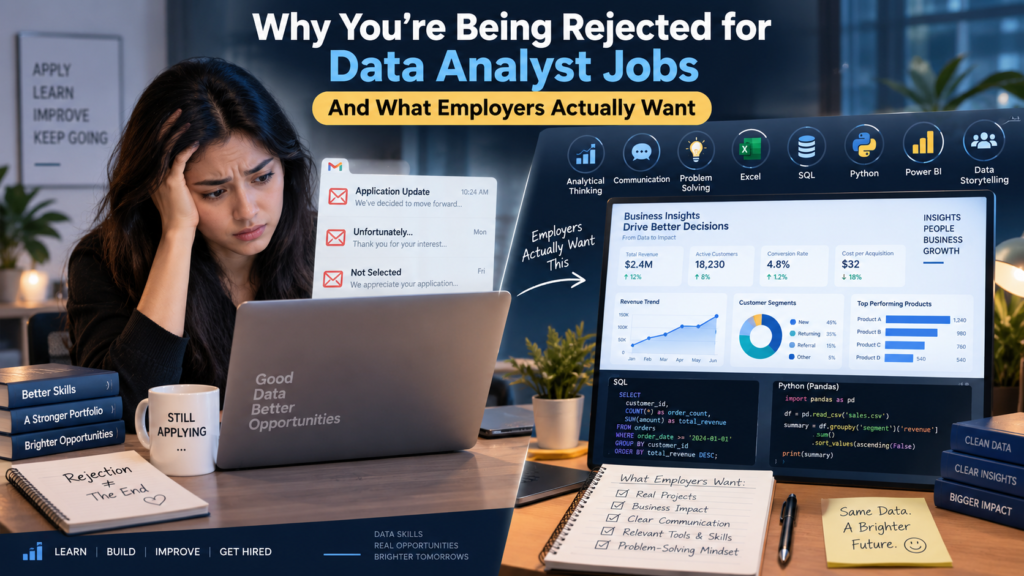
- Apply with evidence. Put results and outcomes on your résumé, and read our guide on why you are being rejected for data analyst jobs to avoid common application mistakes.
Common Mistakes That Hold Back Your Data Analytics Skills
- Collecting tools and certificates without ever finishing a real project.
- Reporting what happened without saying what should happen next.
- Ignoring the business side of the data.
- Using only clean, tutorial-style datasets and freezing when real data is messy.
- Never quantifying results, so nobody can see the value you created.
Frequently Asked Questions About Data Analytics Skills
Why do companies pay more for data analytics skills?
Because the skills connect directly to money. Analysts help reduce waste, spot growth opportunities and support faster, better decisions, and employers are willing to pay for results they can measure.
Which data analytics skills are most valuable in Australia?
SQL, Power BI, Excel, cloud data basics such as Azure, and clear communication come up most often. Adding basic Python and industry knowledge strengthens your profile further.
Do I need a degree to get into data analytics?
Not always. Many employers care more about proven skills, portfolio projects and recognised certifications than a specific degree. A degree can help, but practical proof of your data analytics skills often matters more.
Can I learn data analytics online while working full time?
Yes. Live online classes let you study from Sydney, Melbourne, Brisbane, Perth, Adelaide, Canberra or a regional area around your work hours. Check the course list or the FAQ page for delivery options.
How long does it take to build job-ready data analytics skills?
It depends on your starting point and how much you practise, but most beginners can build a solid foundation in SQL and Power BI within a few months of consistent study, then deepen it with projects and certification.
Final Thoughts: Turn Your Data Analytics Skills Into a Pay Rise
Businesses don’t pay more for numbers. They pay more for clarity, and people who can turn data into decisions provide it. If you build real data analytics skills, prove them with projects and certifications, and learn to explain what the data means, you become the person who makes the business better, and that is the person who gets paid.
Ready to take the next step? Explore the full range of data analytics courses, or speak to a course advisor on 1300 649 299 to find the right pathway for your goals.