Data analytics Australia is one of the fastest-growing and most practical career paths in Australia right now. Whether you’re a recent graduate trying to break into tech, a professional looking to pivot careers, or someone who just wants more job security learning data skills puts you in a strong position.
Across Australia, employers in Melbourne, Sydney, Brisbane, Perth, and beyond are actively hiring people who can work with data. The skills they’re looking for aren’t always deeply technical Power BI, SQL, dashboards, reporting, and data visualisation are consistently at the top of job listings on platforms like SEEK.
This guide walks you through the skills you need, the best course path to follow, and how to find the right training in your city.
Why Data Analytics Skills Are in Demand in Australia
Australian organisations from large enterprises to small businesses are increasingly relying on data to make decisions. Marketing teams use it to track campaigns. Finance teams use it to manage budgets. Operations managers use it to spot inefficiencies. The result is that data literacy has gone from a “nice to have” to a core workplace skill.
Google’s own career pathways highlight data analytics as a gateway into roles like data analyst, business intelligence analyst, and operations analyst all of which are actively advertised across Australia.
Industries Hiring Data Analysts in Australia
- Business and financial services: Banks, insurance firms, and consulting companies in Sydney and Melbourne are among the highest hirers.
- Government: Federal and state agencies across Canberra, Brisbane, and Perth are investing heavily in data capability.
- Healthcare: Hospitals and health services use data analysts to improve patient outcomes and manage resources.
- Retail and e-commerce: From inventory management to customer behaviour analysis, retailers across Australia need data skills.
- Operations and logistics: Supply chain, transport, and operations roles increasingly require reporting and data skills.
What Skills Do You Need to Become a Data Analyst?
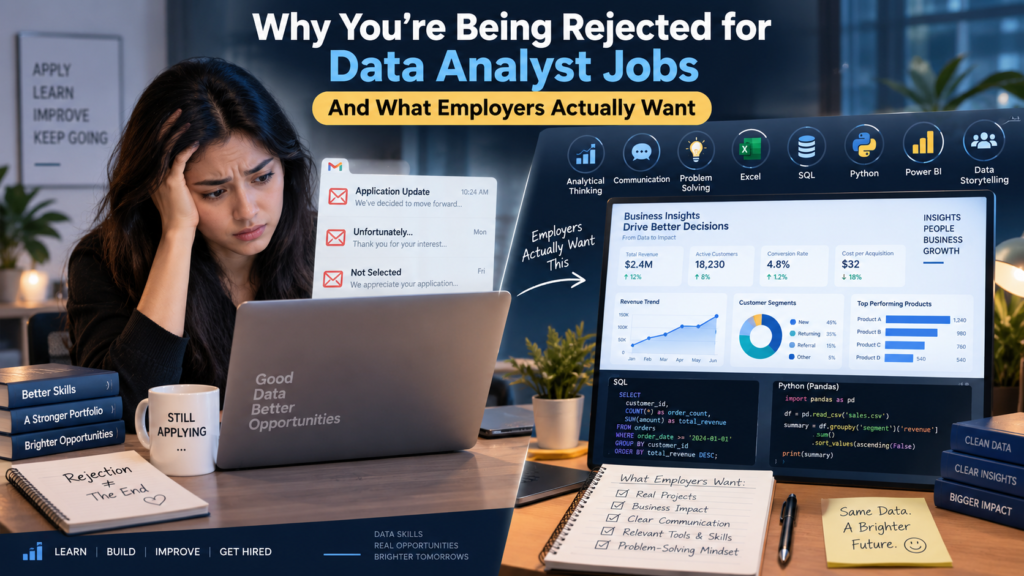
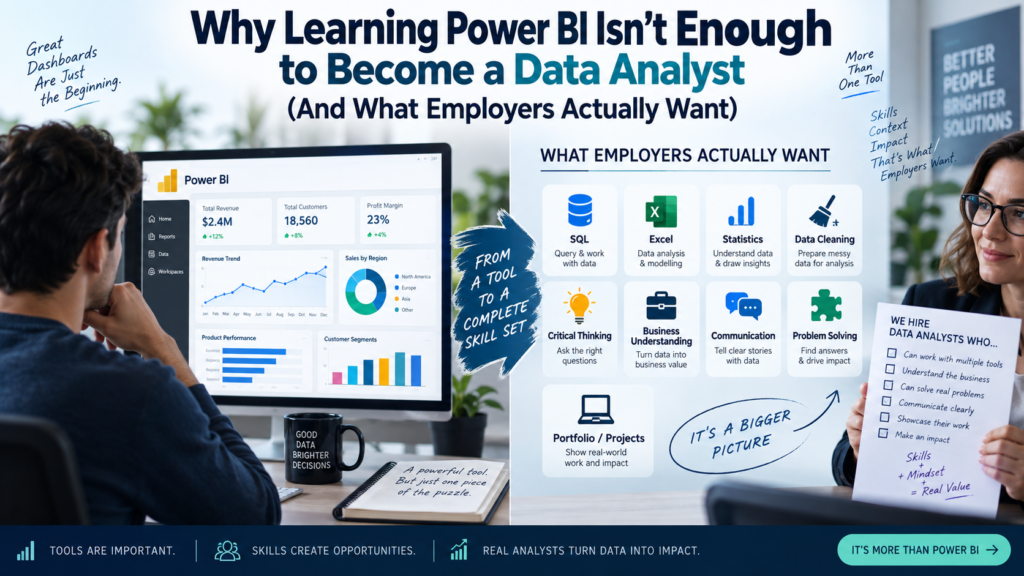
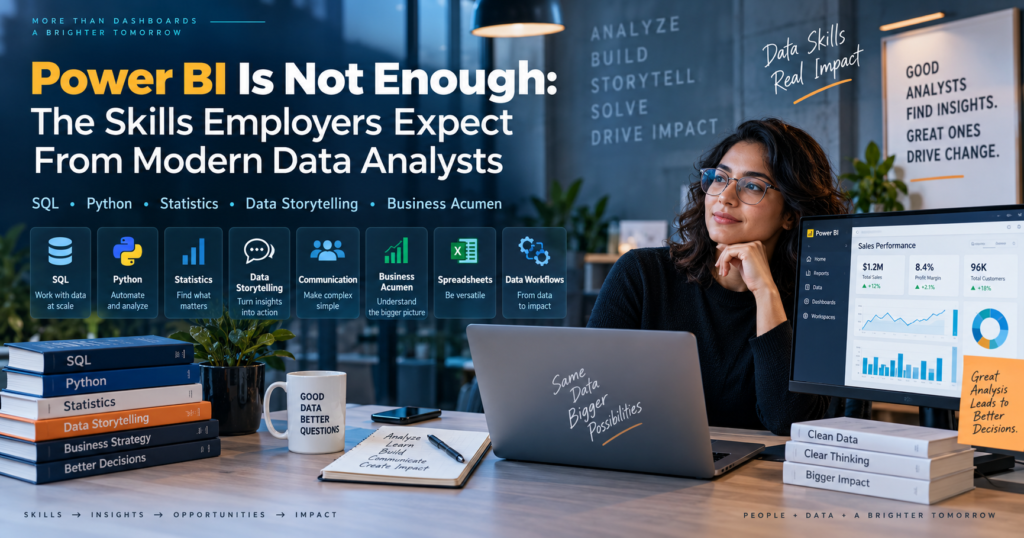
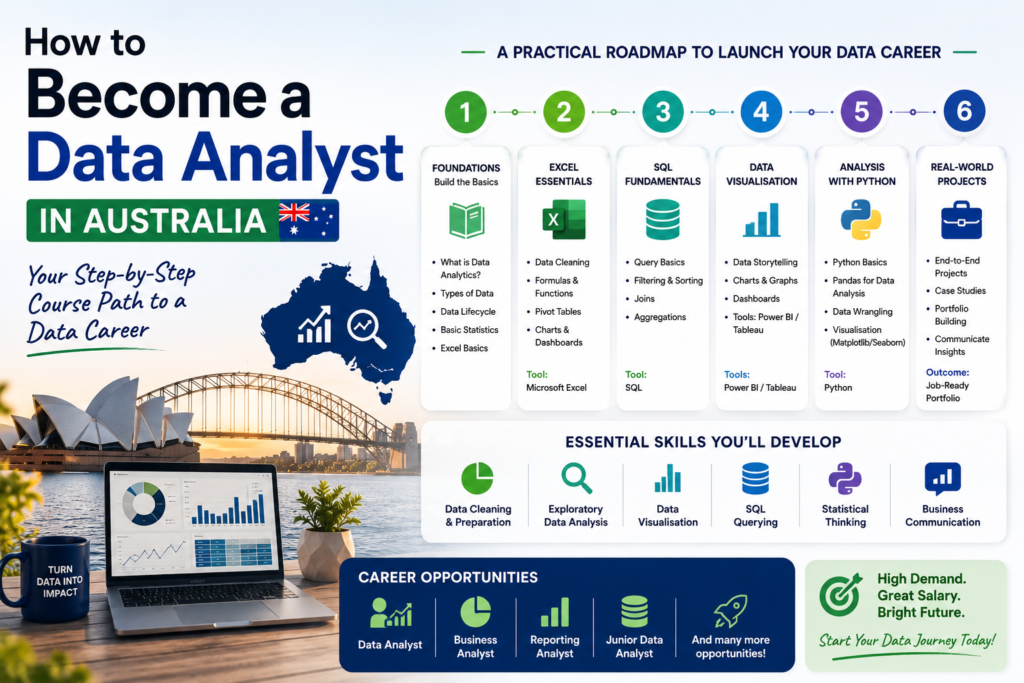
You don’t need a computer science degree to become a data Analytics in Australia. Most employers care more about practical, demonstrable skills than formal qualifications. Here’s what the job market is actually asking for:
1. Excel and Data Basics
Excel remains the most commonly used tool in Australian workplaces. Before diving into anything advanced, you need to be comfortable with data entry, formatting, formulas, sorting, filtering, and basic charts. It’s the foundation everything else builds on.
2. SQL for Querying and Cleaning Data
SQL is the language used to pull, filter, and clean data from databases. It’s one of the most requested skills in Australian data analyst job listings. Even a beginner-level understanding of SELECT, WHERE, JOIN, and GROUP BY queries makes you significantly more employable.
3. Power BI for Dashboards and Reporting
Power BI is Microsoft’s leading business intelligence tool and is used widely across Australian businesses. It covers everything from importing and transforming data (Power Query) to building interactive dashboards and writing DAX measures. Microsoft’s PL-300 certification the Power BI Data Analyst Associate is a respected credential in the Australian market.
4. Python or Advanced Tools (Later)
Python is valuable for more advanced data work, but it’s not essential when you’re starting out. Once you’re comfortable with Excel, SQL, and Power BI, adding Python opens doors to machine learning and automation. Think of it as step three or four, not step one.
Best Data Analytics Course Path for Beginners in Australia
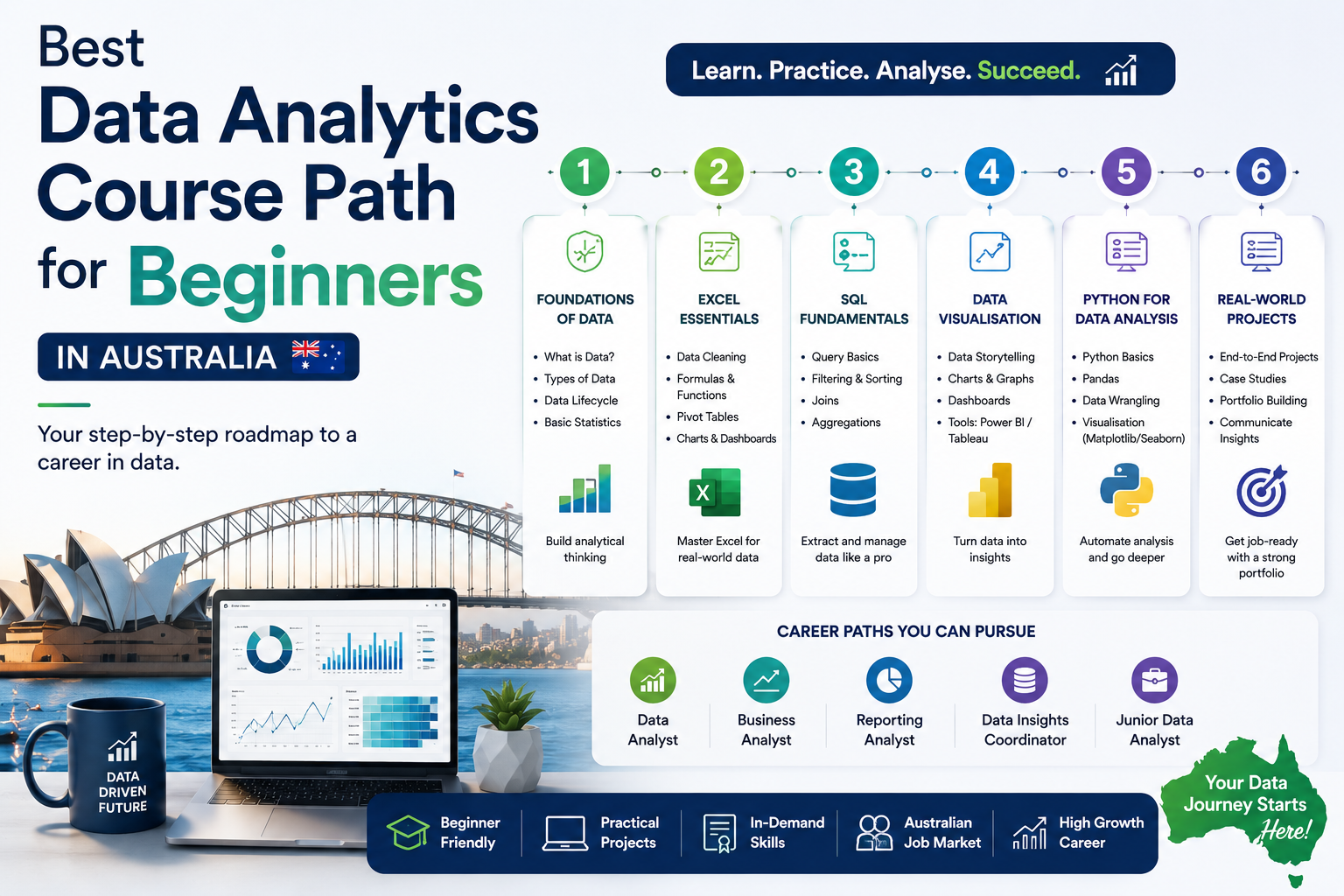
One of the most common mistakes beginners make is jumping straight into advanced tools before they’re ready. A logical, step-by-step progression makes learning faster and sticks better.
Step 1: Start with Fundamentals
Begin with Excel basics and an introduction to data concepts. From there, pick up Power BI Fundamentals and basic SQL. These three skills together are enough to start applying for junior roles or internal data projects at your current workplace.
Step 2: Learn Reporting and Dashboards
Once you understand the basics, focus on building real dashboards and reports. Microsoft defines the Power BI Data Analyst role as one that involves preparing, modelling, visualising, and analysing data all skills covered in intermediate Power BI courses. This step is where your work starts looking genuinely job-ready.
Step 3: Add Certification if Useful
If you want a formal credential to show employers, the Microsoft PL-300 (Power BI Data Analyst Associate) is the most relevant certification in the Australian market. CompTIA Data+ is another option worth considering for a vendor-neutral qualification. Neither is mandatory, but both add credibility to your resume.
Best City to Study Data Analytics in Australia
Data analytics training is available across Australia both in person and online. Here’s a quick look at what each major city offers in terms of demand and training access.
Data Analytics Course Melbourne
Melbourne is one of the strongest markets for data analytics roles in Australia. SEEK consistently shows high demand for Power BI, SQL, and reporting skills from Melbourne-based employers across finance, healthcare, and the public sector. If you’re in Melbourne, you’re in a great location to start building these skills and landing a local role.
Data Analytics Course Sydney
Sydney’s business and enterprise sector makes it a prime market for data analysts. Companies in banking, insurance, and professional services are particularly active hirers. If you’re based in Sydney and want to build skills in Power BI, dashboards, and business reporting, this training path aligns directly with what local employers want.
Data Analytics Course Brisbane
Brisbane’s job market is growing steadily in the analytics space, particularly in infrastructure, government, and healthcare. Training options include flexible online delivery for those who can’t commit to classroom schedules making it accessible whether you’re in the CBD or regional Queensland.
Data Analytics Course Perth
Perth has strong demand in mining, resources, and operations industries where reporting and data skills are increasingly valued. If you’re in Western Australia and looking to upskill, online course delivery means you don’t need to travel for quality training. Enquire about current schedule options for your preferred format.
How to Choose the Right Data Analytics Course in Australia
With plenty of options available, it’s easy to feel overwhelmed. Here’s how to cut through the noise:
Online vs Classroom Learning
Online training gives you flexibility to study around work and family commitments ideal if you’re in Perth, Brisbane, or regional areas. Classroom training in Melbourne or Sydney suits people who prefer live instruction, immediate feedback, and networking with other learners. Many providers offer both, so choose based on how you learn best, not just location.
Beginner vs Intermediate Level
If you’ve never worked with data professionally, start at beginner level even if you feel confident. It’s better to build solid habits from the start. If you already use Excel regularly and have some SQL exposure, an intermediate Power BI course might be the right step.
Short Course vs Certification Pathway
Short skills-based courses are great for quick wins and immediate workplace application. Certifications like Microsoft PL-300 or Google’s Data Analytics Certificate take longer but carry more weight on a resume, particularly if you’re making a full career change. Many learners do both: complete a short course first to build confidence, then pursue certification.
Which Course Should You Choose Based on Your Goal?
For Beginners: Start with Excel and Power BI Fundamentals
If you’re starting from scratch, the best first move is a combination of Excel basics and Power BI Fundamentals. These two skills together cover the most common tasks in entry-level data roles and give you something tangible to show in a job interview.
For Career Changers: Add SQL and Reporting Projects
If you’re coming from a different industry teaching, administration, retail, or finance add SQL to your Excel and Power BI skills. Then build a small portfolio of practice dashboards and reports. Employers on SEEK consistently respond better to candidates who can show real work, even self-directed projects.
For Certification Seekers: Consider PL-300 or CompTIA Data+
If you already have some data skills and want a formal credential, Microsoft PL-300 is the most directly relevant for Power BI roles. CompTIA Data+ is a solid vendor-neutral option. Both are recognised by Australian employers and can support a salary increase or internal promotion.
Final Thoughts: Start Your Data Analytics Career in Australia
The demand for data analytics skills across Australia isn’t slowing down. Whether you’re in Melbourne, Sydney, Brisbane, or Perth, employers are actively looking for people who can turn raw data into useful insights and they don’t always need a degree to do it.
The best thing you can do right now is start. Pick the beginner path, build those first three skills, and work your way up. The learning is practical, the job opportunities are real, and the investment pays off faster than most traditional study options.
Compare data analytics courses by city, ask about current schedules, or request a personalised beginner learning plan. Enquire today and take the first step toward a data career in Australia.
Frequently Asked Questions
How do I become a data analyst in Australia?
Start by building skills in Excel, SQL, and Power BI the three tools most commonly required in Australian data analyst job listings. From there, build a portfolio of practice reports and dashboards, and consider a certification like Microsoft PL-300 to strengthen your resume.
What is the best data analytics course for beginners in Australia?
A Power BI Fundamentals course combined with basic SQL training is a strong starting point. These skills are directly relevant to entry-level roles and cover the most commonly requested tools in Australian job ads.
Should I learn SQL or Power BI first?
Start with Excel basics, then move into Power BI. SQL can run alongside Power BI or come shortly after. Power BI gives you faster visual results, which keeps motivation high while you’re learning. SQL adds depth for querying and cleaning raw data.
Which city is best for data analytics courses in Australia?
Melbourne and Sydney have the strongest job markets for data analytics roles. However, quality training is available online and in person across Brisbane, Perth, and other cities. Online delivery means location doesn’t need to limit your learning options.
Is PL-300 worth it for beginners in Australia?
PL-300 is best suited for people who already have some Power BI experience. It’s not an ideal first step for complete beginners, but it’s a strong goal to work toward. Start with a fundamentals course, build confidence, then pursue the certification.
Can I study data analytics online in Australia?
Yes. Most data analytics training providers in Australia offer flexible online delivery, which is ideal for working professionals and those outside major cities. Online courses cover the same skills as classroom training and are increasingly the preferred format for busy learners.