
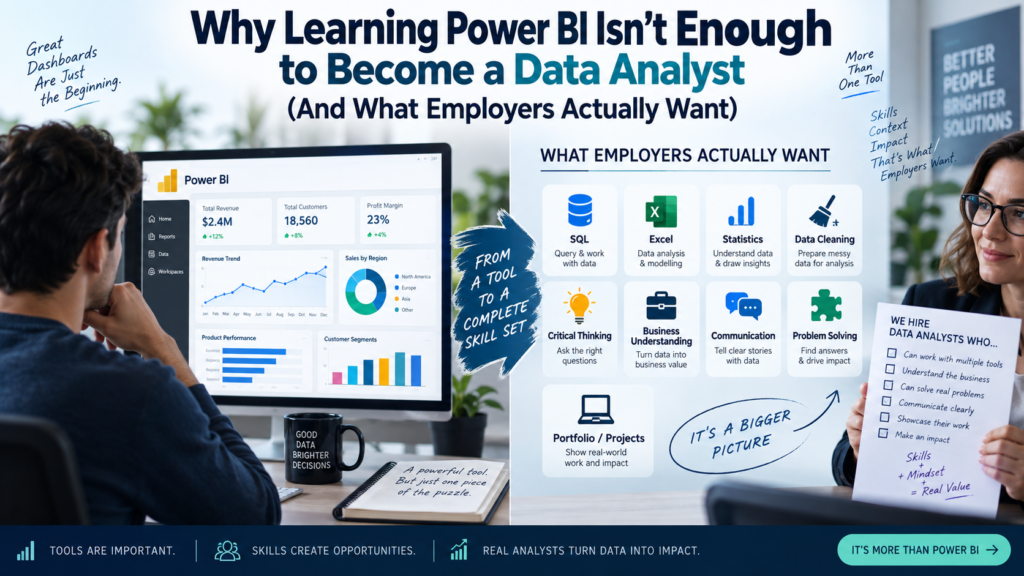
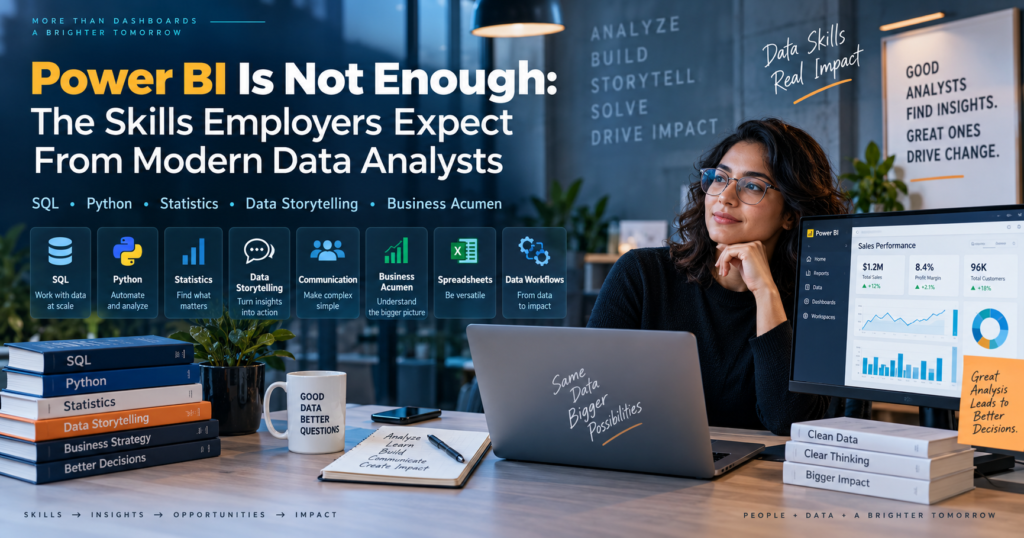
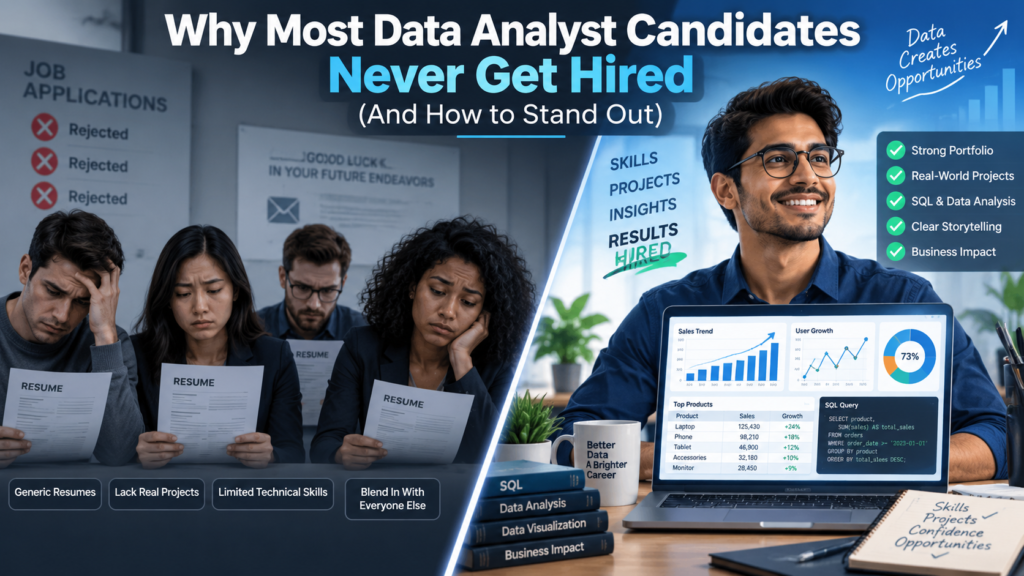
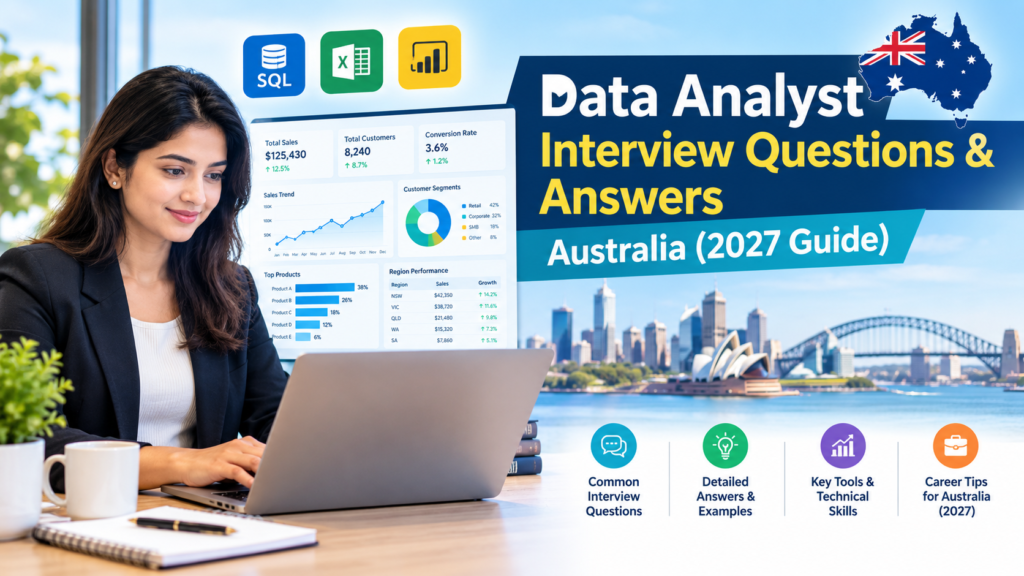
Power BI is usually the first tool people learn when they decide to become a data analyst, and it’s easy to see why: the dashboards look impressive, the course is quick to finish, and it feels like real progress. Then the job applications start, and it becomes clear that a few polished dashboards aren’t enough to get hired. Power BI is a visualisation tool. Employers are hiring for a much broader skill set, and that gap is exactly where most aspiring analysts get stuck.
This guide breaks down why Power BI alone won’t get you hired as a data analyst, and exactly which skills employers are actually screening for.
Why Power BI Alone Won’t Get You Hired to Become a Data Analyst
An analysis of over 65,000 data analyst job postings by career platform Huntr found that SQL appears in roughly 71% of listings and is strictly required in 61%, making it the clearest gatekeeping skill in the field. Power BI, by contrast, appears in only around 27% of postings, and even then it usually leans preferred rather than required.
That’s the core problem with learning Power BI in isolation: it’s a genuinely useful tool, but it’s not the tool employers are gatekeeping the role on. If you can build a dashboard but can’t query, clean, or reason about the data behind it, you’re missing the skill that actually opens the door.
What’s Missing When You Only Know Power BI
- The ability to query and join data directly from a database using SQL, rather than relying on data someone else has already prepared.
- Data cleaning and preparation skills, since real business data is rarely dashboard-ready out of the box.
- Basic statistical literacy, to interpret whether a trend in a dashboard is actually meaningful.
- Python or scripting fundamentals, increasingly expected for automating repetitive analysis tasks.
- The ability to explain what a dashboard means to a non-technical stakeholder, not just build it.
What Employers Actually Want From a Data Analyst
Talk to hiring managers and a consistent pattern emerges: they want candidates who can move through the full analytics workflow, not just the visualisation step at the end of it.
1. SQL as a Genuine, Daily-Use Skill
SQL is the single most requested data analyst skill in the market, and employers expect candidates to write real queries confidently, not just recognise the syntax from a course.
2. Data Cleaning and Preparation
Most real analytics work starts with messy, inconsistent data. Employers want to see that you can identify errors, handle missing values, and structure raw data before it ever reaches a dashboard.
3. Business Context, Not Just Technical Output
A dashboard is only useful if it answers a real business question. Employers consistently favour candidates who can connect a chart back to a decision the business actually needs to make.
4. Comfort Across Multiple Tools
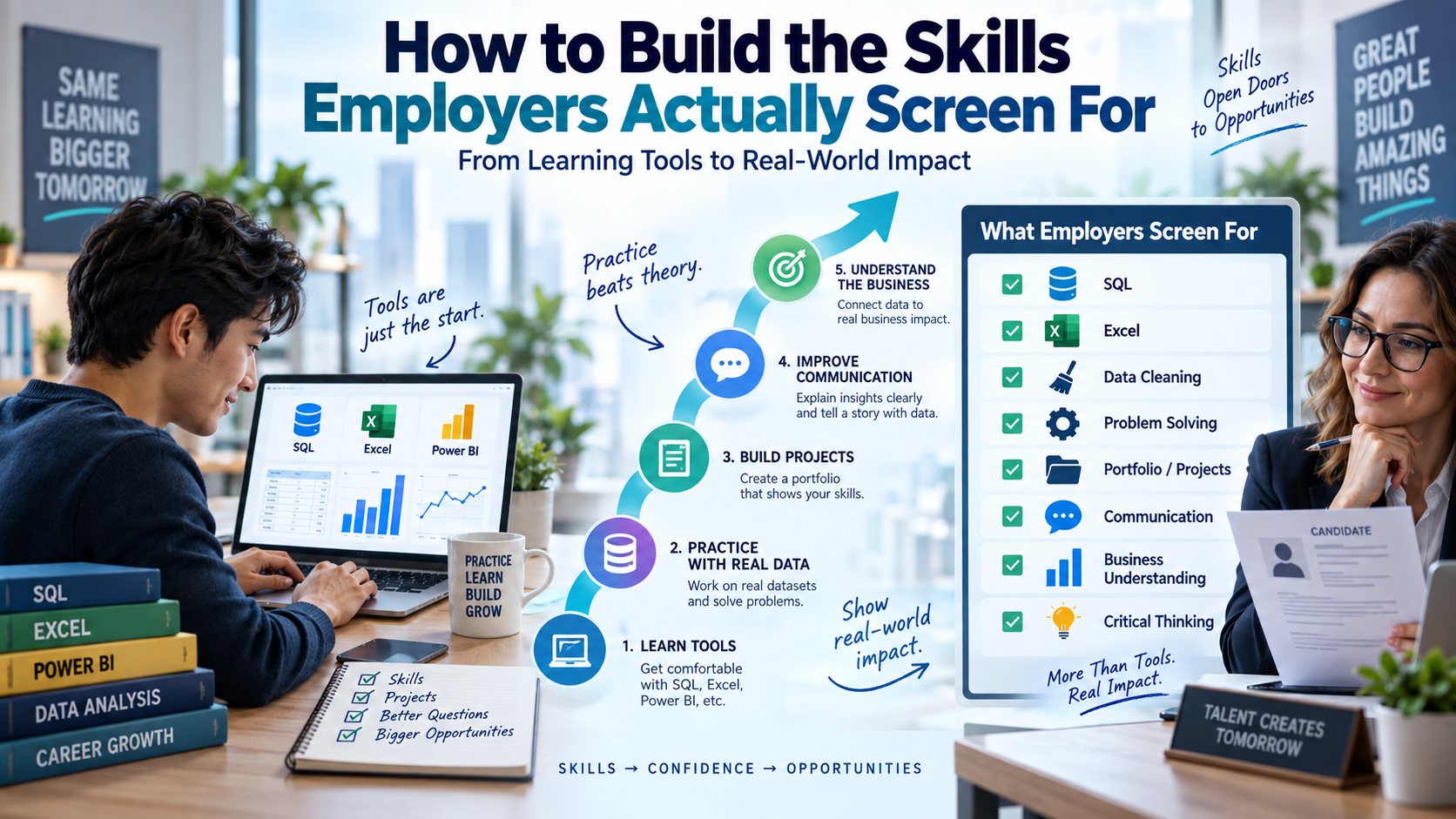
SQL, Excel, and at least one visualisation tool like Power BI or Tableau together form the expected baseline. Python adds further weight, particularly for roles beyond entry level.
5. Clear Communication of Insights
Being able to explain what a number means, and what to do about it, in plain language is one of the most consistently underrated hiring criteria for data analyst roles.
How to Build the Skills Employers Actually Screen For
Closing this gap doesn’t mean abandoning Power BI, it means building it on top of the fundamentals employers are actually gatekeeping the role on. A structured learning pathway that moves through SQL, data preparation, dashboarding and reporting mirrors exactly how the skill is tested at interview and on the job.
- SQL for Data Analysis – Beginner to build the single most requested data analyst skill
- Power BI Fundamentals and Advanced Power BI Modelling for genuine dashboard and modelling depth
- Microsoft PL-300 for a recognised, certified Power BI Data Analyst credential
- Azure Data Fundamentals for core cloud and data concepts increasingly expected in the role
- CompTIA Data+ for a vendor-neutral, foundational data analytics certification
- BCS Professional Certificate in Data Analysis for a deeper, structured analysis and modelling pathway
Data Analytics Courses Across Australia
Because local employer demand varies by city and industry, training close to your target job market matters. Data Analytics Courses are available online and in major Australian cities, with flexible scheduling for working professionals and career changers.
- Melbourne, with strong demand across finance, healthcare, retail, and state government
- Sydney, where finance, technology, and government roles drive high demand
- Brisbane, supported by a growing tech and resources sector
- Perth, where mining, energy, and resources rely heavily on data-driven decisions
- Adelaide, with growing demand across defence, health, and government
- Canberra, where government agencies increasingly rely on certified analytics skills
A Practical Learning Order for Becoming a Data Analyst
- Start with SQL, it’s the single most requested and most tested skill in the field.
- Add Excel fundamentals, still the universal baseline tool in most workplaces.
- Layer in Power BI or Tableau once you can already query and clean data confidently.
- Build two or three portfolio projects that show the full workflow, not just a finished dashboard.
- Practise explaining your findings out loud, in plain language, before your first interview.
Frequently Asked Questions
Is Power BI enough to become a data analyst?
No. Power BI is a valuable visualisation tool, but most job postings gatekeep the role on SQL first. Employers expect Power BI alongside SQL, data cleaning, and business context, not as a standalone skill.
What skills do I need most to become a data analyst?
SQL is the most consistently required skill, followed by data analysis fundamentals, Excel, a visualisation tool such as Power BI or Tableau, and increasingly, basic Python.
Can I become a data analyst without a degree?
Yes. Many employers now prioritise demonstrated, practical skills and portfolio projects over formal qualifications, particularly when a candidate can show hands-on SQL, data preparation, and dashboarding work.
Ready to Build the Full Data Analyst Skill Set?
If you’re ready to move beyond Power BI dashboards and build the complete skill set employers are actually hiring for, explore the course pathways or speak with an advisor about the right starting point for your experience level.
Explore Data Analytics Courses | Contact Us | Call 1300 649 299