
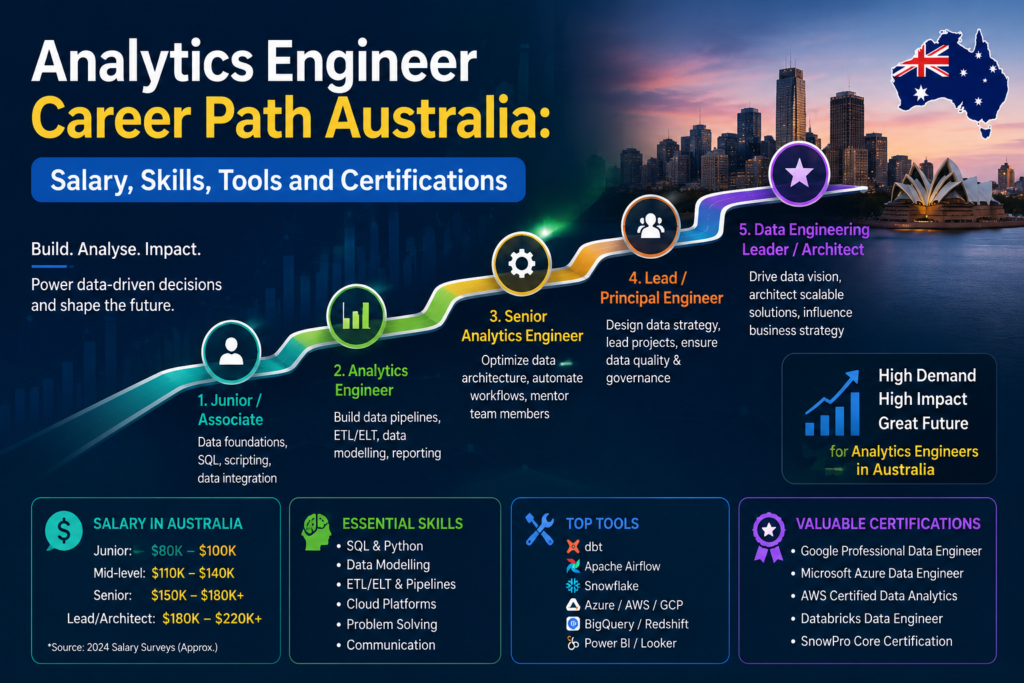


The analytics engineer career path Australia is one of the fastest-growing routes into senior data work, sitting between traditional data analysts and full data engineers. If you’re already comfortable with SQL and dashboards and want to know what’s next or you’re starting from scratch and want a role with strong salary growth this guide breaks down exactly what the job involves, what it pays, and how to build the skills employers are actually hiring for.
We’ll cover the core responsibilities, the tools you need to know, realistic salary bands across Australia, and the certifications that carry weight with local employers, so you can plan your next 12 to 24 months with a clear target instead of guessing.
What Does an Analytics Engineer Actually Do?
An analytics engineer sits between raw data and the reports business teams rely on. Where a data engineer builds and maintains pipelines, and a data analyst builds dashboards and answers business questions, an analytics engineer owns the layer in between: cleaning, modelling and testing data so that it’s trustworthy before anyone builds a report on top of it.
In practice, that means writing tested SQL transformation logic, maintaining a semantic or data model, defining consistent business metrics (so finance and marketing aren’t reporting two different “revenue” numbers), and working closely with both data engineers and analysts. It’s a role built for people who like structure, consistency and getting the underlying numbers right — not just visualising them.
The Analytics Engineer Career Path in Australia, Step by Step
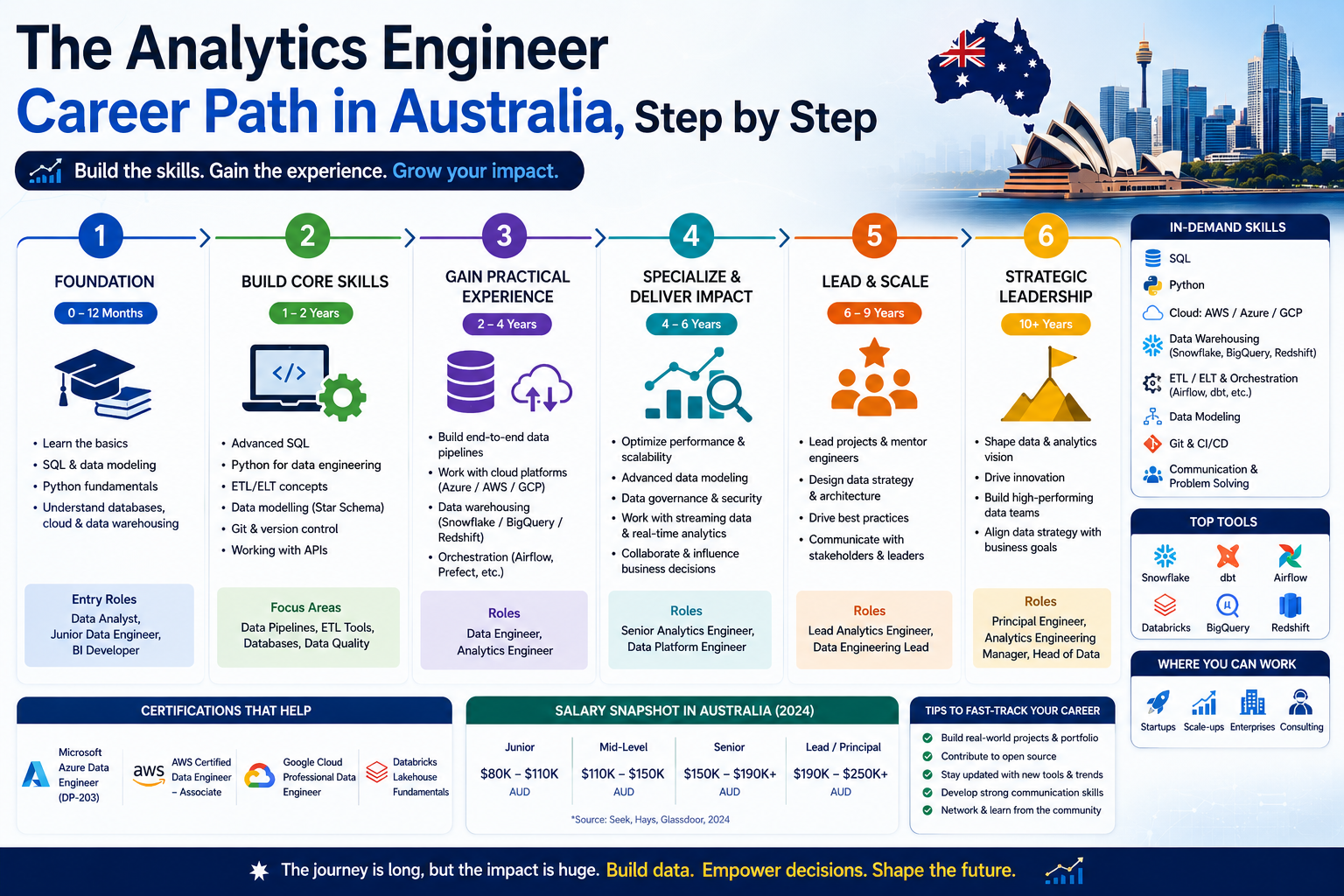
1. Start as a Data or Business Analyst
Most people on the analytics engineer career path in Australia start in a data analyst, business analyst or reporting analyst role, learning SQL, Power BI or Tableau, and basic data modelling on the job.
2. Build Deeper SQL and Data Modelling Skills
The jump to analytics engineering usually comes from going deeper into SQL — window functions, CTEs, performance tuning — and learning proper data modelling concepts like star schemas, fact and dimension tables, and version-controlled transformation logic.
3. Learn a Modern Transformation Tool
Tools like dbt (data build tool), Microsoft Fabric’s dataflows and notebooks, or Azure Synapse pipelines are where analytics engineers spend most of their time. Learning at least one of these properly is usually the clearest signal to employers that you’re ready for the title change.
4. Move Into a Dedicated Analytics Engineer Role
From here, most people move into a formal analytics engineer or BI engineer title, often within the same company, working across the modelling layer, documentation and metric governance for the wider analytics team.
5. Progress to Senior, Lead or Analytics Engineering Manager
With three to five years of experience, analytics engineers in Australia typically move into senior or lead roles, owning the data platform’s modelling strategy, mentoring junior analysts, and working directly with engineering leadership on data architecture decisions.
Analytics Engineer Salary in Australia
Analytics engineer salaries in Australia vary by city, industry and seniority, but current job listings across Melbourne, Sydney, Brisbane, Perth, Adelaide and Canberra give a reasonably consistent picture of what’s on offer in 2026.
| Level | Typical Base Salary (AUD) | Typical Experience |
| Junior / Graduate Analytics Engineer | $75,000 – $95,000 | 0–2 years |
| Mid-Level Analytics Engineer | $100,000 – $130,000 | 2–5 years |
| Senior Analytics Engineer | $130,000 – $160,000+ | 5–8 years |
| Lead / Principal Analytics Engineer | $160,000 – $190,000+ | 8+ years |
Note: these figures are indicative, based on publicly advertised roles at the time of writing, and exclude superannuation and bonuses. Salaries vary significantly by industry (finance and tech generally pay above average) and by whether the role leans more toward dbt/Snowflake-style engineering or Power BI/Fabric-style analytics. Always check current listings on SEEK, Hays or Glassdoor for up-to-date figures before negotiating an offer.
Core Skills Employers Want on This Career Path
- Advanced SQL — CTEs, window functions, performance tuning and query optimisation.
- Data modelling — star schemas, fact/dimension design, and clear naming conventions.
- A modern transformation tool — dbt, Microsoft Fabric dataflows, or Azure Synapse.
- Version control — Git fundamentals, since transformation logic is treated as code.
- BI tool fluency — Power BI (dominant across Australian enterprise) or Tableau.
- Communication — translating technical modelling decisions for non-technical stakeholders.
Tools You’ll Actually Use as an Analytics Engineer
Microsoft Fabric & Power BI
Microsoft Fabric has become the dominant analytics platform across Australian enterprise and government, combining data engineering, data warehousing and Power BI reporting in one environment making it one of the most in-demand tool sets for this career path locally.
SQL & Cloud Data Warehouses
Whether it’s Azure Synapse, Snowflake or BigQuery, strong SQL inside a modern cloud warehouse is non-negotiable. Most analytics engineer job ads in Australia list SQL as a hard requirement before any specific tool.
dbt (Data Build Tool)
dbt is increasingly common in Australian analytics teams for managing tested, version-controlled transformation logic, particularly in tech, fintech and scale-up environments.
Certifications That Matter for This Career Path
Certifications won’t replace hands-on project experience, but they’re a fast, credible way to show Australian employers you have structured, validated skills especially if you’re transitioning from a data analyst role.
- Microsoft Certified: Fabric Analytics Engineer Associate (DP-600/DP-605) the most directly relevant certification for this exact title.
- Microsoft Certified: Power BI Data Analyst Associate (PL-300) strong foundation if you’re coming from a BI-heavy background.
- Microsoft Certified: Azure Data Fundamentals (DP-900) a solid entry point if you’re newer to cloud data concepts.
- CompTIA Data+ or CompTIA DataX vendor-neutral options that broaden your credibility beyond the Microsoft ecosystem.
Build the Analytics Engineer Career Path with the Right Training
The fastest way to move along the analytics engineer career path in Australia is to combine structured certification study with real project work not just watch tutorials. Our course pathway is built around exactly the skills covered in this guide.
If Microsoft Fabric is your target platform, our Microsoft DP-605 (Fabric Analytics Engineer) course is the most directly relevant certification pathway. Pair it with Advanced Power BI Modelling and the Microsoft PL-300 course for a well-rounded, employer-recognised skill set.
If you’re earlier in your journey, start with SQL for Data Analysis – Beginner, Power BI Fundamentals and Azure Data Fundamentals before moving into the more advanced modelling and Fabric content.
Courses run in person in Melbourne, Sydney and Brisbane, with live online delivery for learners in Perth, Adelaide and Canberra.
Related Reading
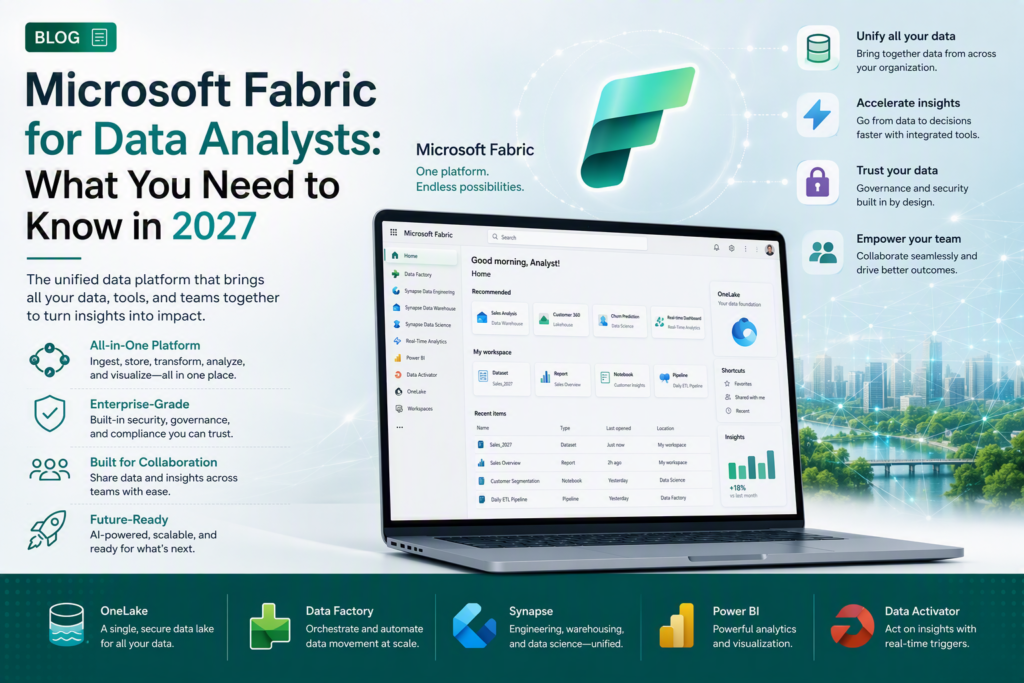
For the bigger platform picture behind this career path, see our comparison of Snowflake vs Microsoft Fabric: Which Platform Should Data Professionals Learn?, our breakdown of Data Analyst vs Data Engineer: Which Career Pays More in Australia?, and Microsoft Fabric for Data Analysts: What You Need to Know for how Fabric is reshaping this whole career track.
Frequently Asked Questions
Is analytics engineering a good career path in Australia?
Yes. Demand is strong across finance, retail, government and tech, and the role typically pays more than a standard data analyst position once you reach mid-level, largely because it combines analytical and technical modelling skills.
Do I need to know how to code to become an analytics engineer?
You need strong SQL, and increasingly some exposure to Python or dbt’s SQL-plus-Jinja templating but you don’t need a full software engineering background to start on this path.
What’s the difference between an analytics engineer and a data engineer?
A data engineer typically builds and maintains the pipelines that move data into the warehouse. An analytics engineer works one layer up, transforming and modelling that data so it’s ready for reporting and analysis.
Conclusion
The analytics engineer career path in Australia offers strong salary growth and long-term demand for people willing to go beyond dashboard-building into data modelling, testing and metric governance. The clearest route in is deepening your SQL, learning a modern transformation tool like Fabric or dbt, and backing it with a recognised certification.
Ready to start building toward it? Explore our data analytics courses across Australia or speak with a course advisor about the right starting point for you.