

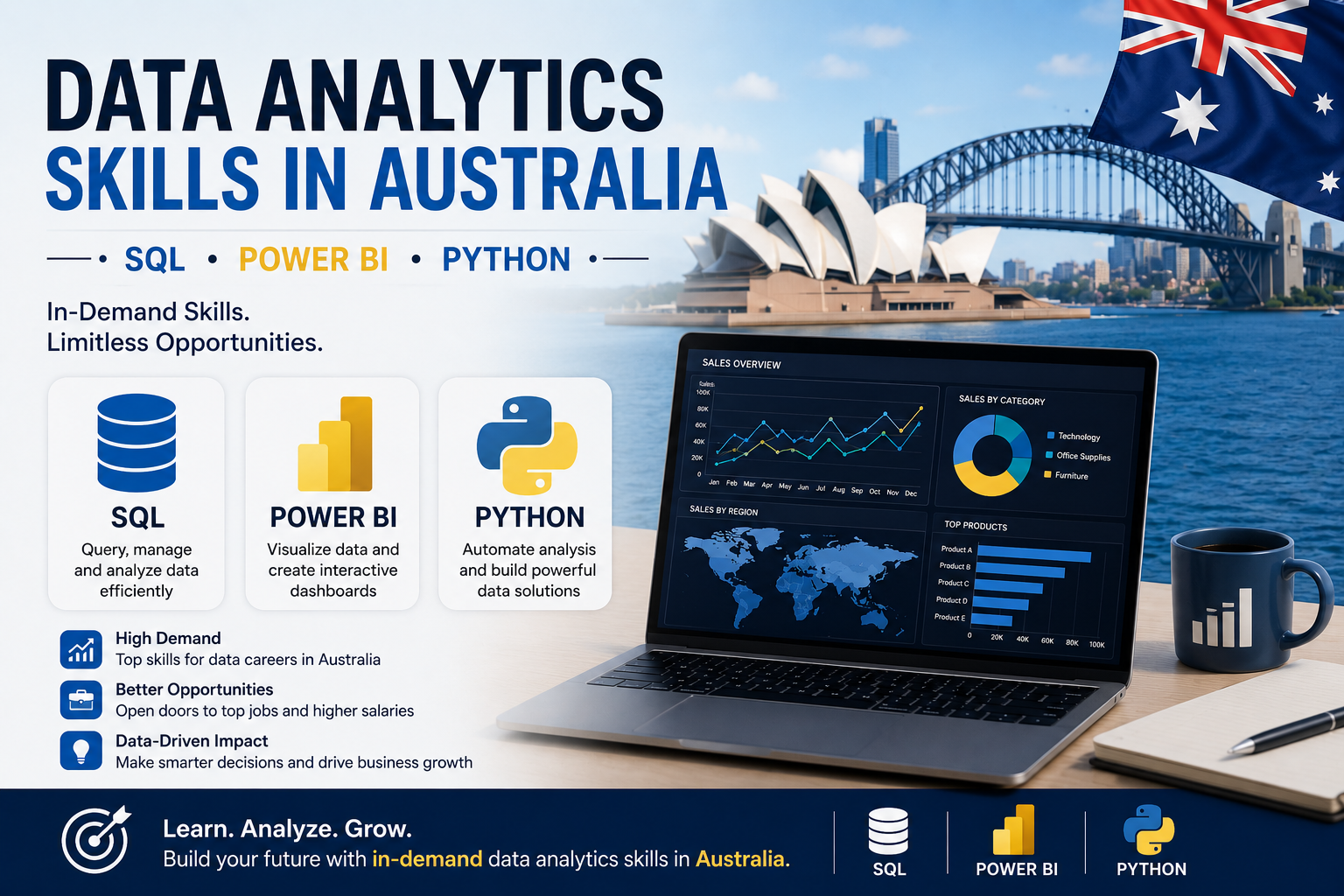
Building data analytics skills in Australia is one of the more practical career moves you can make right now. Whether you want to work in Sydney, Melbourne, Brisbane, Perth, Adelaide, Canberra, Hobart, Darwin or the Gold Coast, employers are after people who can work with data, put together reports, build dashboards and explain what the numbers actually mean.
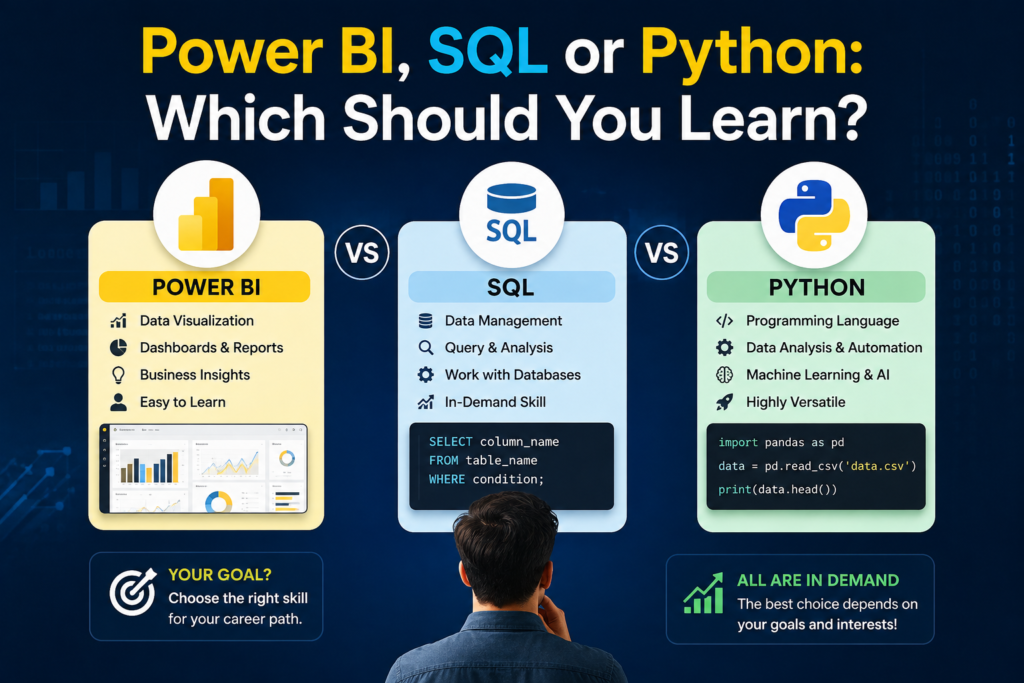
Beginners almost always land on the same question early on: should I learn SQL, Power BI or Python first?
This guide walks through the smartest learning order for beginners and helps you choose the right data analytics course pathway in Australia, without wasting months on the wrong tool.
Why Data Analytics Skills Matter in Australia
Australian businesses lean on data analytics for reporting, decision-making, customer insights, finance, operations and performance tracking. It isn’t confined to tech companies either — finance, healthcare, retail, education, government, logistics and technology all hire for these skills regularly.
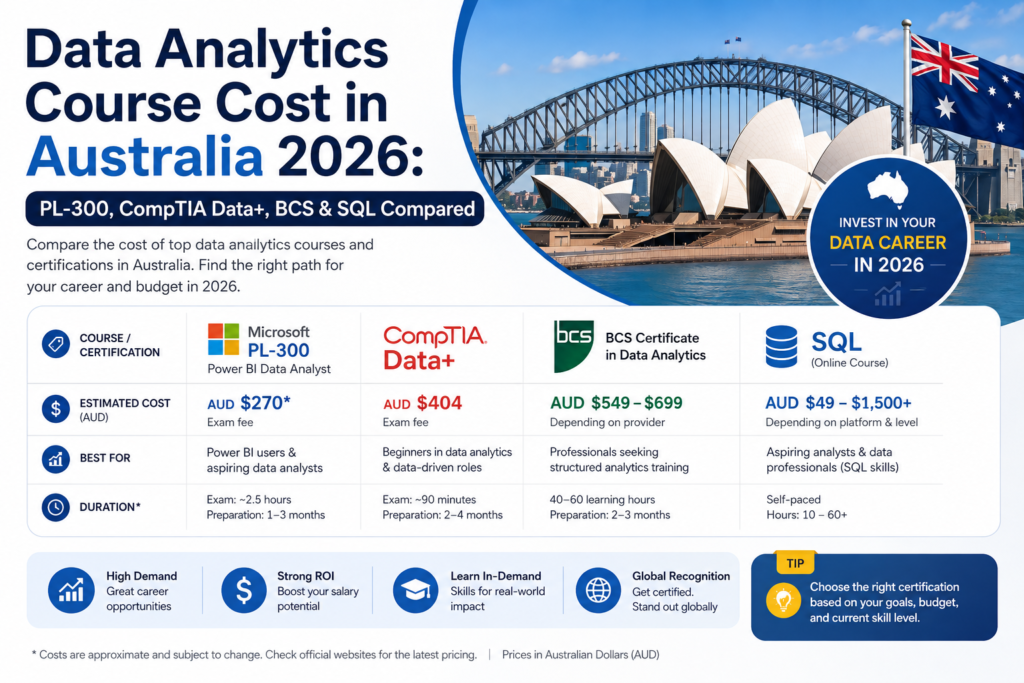
Employers commonly ask for SQL, Power BI, Excel, dashboards, reporting and data cleaning experience. A quick look at SEEK shows steady demand for Power BI Data Analyst and SQL/BI roles across Australian cities, which tells you these tools aren’t going anywhere any time soon.
If you want to start a data analytics career in Australia, the smartest move isn’t learning every tool at once — it’s learning the right tool at the right time.
What Is SQL and Why Should You Learn It First?
SQL is one of the most important foundation skills for data analysts. It lets you query, filter, join and analyse data sitting inside databases — which, in most businesses, is where the actual data lives. Learning SQL early gives you direct access to that data, rather than waiting on someone else to pull a report for you.
- SELECT statements
- WHERE filters
- JOIN tables
- GROUP BY
- Aggregations
- Sorting data
- Cleaning records
- Extracting business data
- Preparing data for dashboards
SQL Is the Foundation Skill for Data Analysts
SQL is usually the first serious data skill beginners should learn, simply because most business data sits in databases. Once you can write SQL queries, you can get to the data you actually need for reports, dashboards and analysis — instead of relying on someone else to extract it for you.
If you’re starting your data analytics journey, our SQL training can help you build the foundation skills needed for real workplace data tasks.
What Is Power BI and Why Is It So Popular?
Power BI is used to build professional dashboards, reports and business intelligence solutions. It also works closely with Microsoft Fabric for reporting, semantic models and governed analytics, which is increasingly how larger Australian organisations are structuring their data work.
- Importing data
- Power Query
- Data modelling
- DAX basics
- Charts and visuals
- KPI dashboards
- Interactive reports
- Report sharing
- Business storytelling
- Executive dashboards
Power BI Is Best for Dashboards and Business Reporting
Power BI suits learners who want to turn raw data into clear visual reports. It’s especially useful for business analysts, reporting analysts, finance teams, managers and data analysts who need to communicate findings quickly.
If you want to build dashboards and visual reports, our Power BI course can help you create practical, business-ready reports.
What Is Python and When Should Beginners Learn It?
Python is powerful for data cleaning, automation, analysis and the basics of machine learning. It plays a clear role in the analytics pathway, particularly once you’re ready to automate repetitive tasks rather than do everything manually in a spreadsheet.
- Python basics
- Pandas
- Data cleaning
- CSV and Excel automation
- Data visualisation
- Basic statistics
- Repetitive task automation
- Introductory machine learning
Python Is Powerful, But Not Always the First Step
Python is genuinely useful, but most beginners get more value learning Excel, SQL and Power BI first. Once you understand data structure, reporting and dashboards, Python becomes a lot easier to pick up — and a lot more valuable once you do.
If you already understand Excel, SQL or Power BI, learning Python can help you move into automation, advanced analytics and data science.
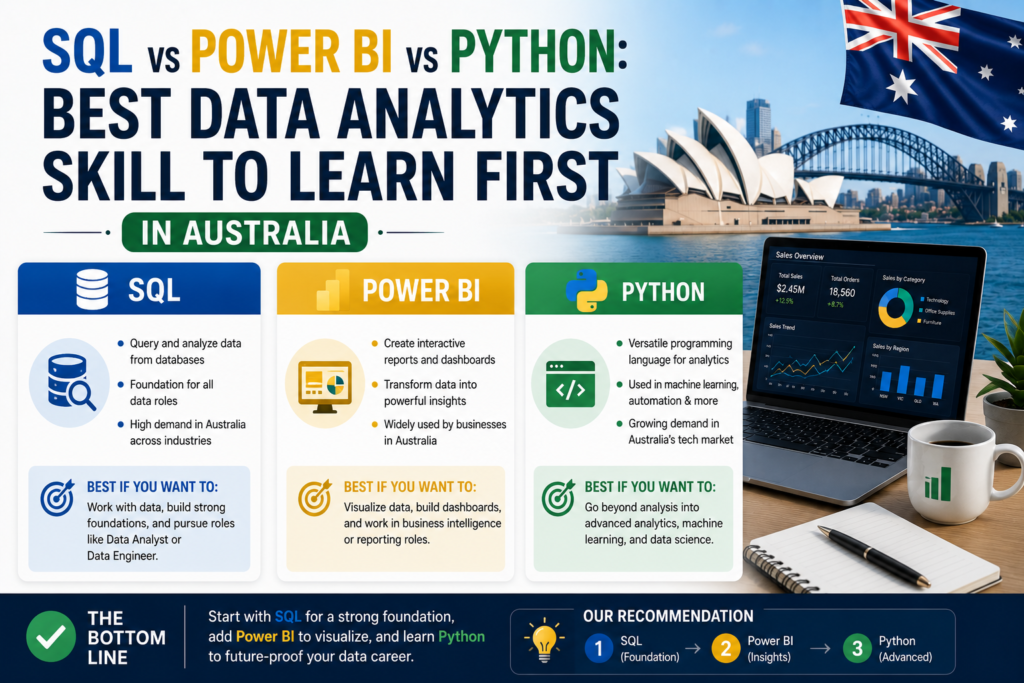
SQL vs Power BI vs Python: Which One Should You Learn First?
Recommended learning order:
- Excel
- SQL
- Power BI
- Python
- Microsoft Fabric or Azure Data
Step 1 — Start with Excel
Excel helps beginners understand data tables, formulas, filtering and basic reporting before moving into more specialised tools.
Step 2 — Learn SQL
SQL helps you extract and manage data from databases — the backbone of most reporting work.
Step 3 — Learn Power BI
Power BI helps you turn that data into dashboards and professional reports stakeholders can actually use.
Step 4 — Learn Python
Python helps with automation, deeper analysis and more advanced data workflows once the fundamentals are solid.
Step 5 — Learn Microsoft Fabric or Azure Data
Microsoft Fabric is an end-to-end analytics platform covering data ingestion, transformation, real-time analytics, data science and reporting — it makes far more sense once you already understand SQL and Power BI basics.
Quick Comparison: SQL, Power BI and Python
| Tool | Best For |
| SQL | Querying databases and preparing data. |
| Power BI | Dashboards, reports and business intelligence. |
| Python | Automation, advanced analysis and data science. |
| Best beginner order | Excel → SQL → Power BI → Python → Microsoft Fabric / Azure |
Data Analytics Courses and Skills Across Australia
At Data Analytics Courses Australia, learners can build practical analytics skills from anywhere in the country. Whether you’re based in a major city or a regional area, online data analytics training can help you develop job-ready skills in SQL, Power BI, Python, Excel, dashboards and reporting.
Data Analytics Courses in Sydney
Sydney is a major business, finance and technology hub. Learners in Sydney can benefit from SQL, Power BI and Python skills for roles in finance, consulting, marketing, operations and business reporting.
Data Analytics Courses in Melbourne
Melbourne has strong demand for data, reporting, BI and analytics roles. Job listings in Melbourne often call out messy data handling, Excel, SQL, Python, BI tools, dashboards and data quality as core requirements.
Data Analytics Courses in Brisbane
Brisbane learners can use data analytics skills for business reporting, operations, finance, government, healthcare and retail roles. Power BI and SQL are especially useful for turning business data into dashboards.
Data Analytics Courses in Perth
Perth professionals in mining, construction, logistics, government and business operations can benefit from SQL, Power BI, Excel and Python training. These tools help with reporting, forecasting, operational dashboards and data analysis.
Data Analytics Courses in Adelaide
Adelaide learners can build data analytics skills for finance, administration, education, government, healthcare and small business reporting. SQL and Power BI are good starting points for beginners.
Data Analytics Courses in Canberra
Canberra professionals often work in government, policy, administration, project reporting and data governance. SQL, Power BI, Azure and Microsoft Fabric skills support secure and structured data reporting.
Data Analytics Courses in Hobart
Hobart learners can use data analytics training to build practical reporting and dashboard skills for business, government, education and administration roles.
Data Analytics Courses in Darwin
Darwin learners can access online data analytics training to improve workplace reporting, Excel analysis, SQL queries, Power BI dashboards and business decision-making.
Data Analytics Courses in Gold Coast
Gold Coast learners, small business owners and professionals can use data analytics skills for sales tracking, marketing reports, customer insights, dashboards and business performance analysis.
Best Data Analytics Learning Path for Beginners in Australia
Beginner Level
- Excel basics
- Data cleaning
- Basic charts
- Simple reporting
- Intro to SQL
Intermediate Level
- SQL joins
- Power BI dashboards
- Power Query
- Data modelling
- DAX basics
- Business reporting
Advanced Level
- Python
- Automation
- Advanced Power BI
- Microsoft Fabric
- Azure data concepts
- Data pipelines
- Portfolio projects
Which Data Analytics Course Should You Choose?
Choose SQL If You Want to Work with Databases
Best for beginners who want to understand how data is stored, queried and prepared.
Choose Power BI If You Want to Build Dashboards
Best for learners who want to create reports, dashboards and visual business insights.
Choose Python If You Want Automation and Advanced Analytics
Best for learners who already understand basic data analysis and want to move into automation or data science.
Choose Microsoft Fabric or Azure If You Want Cloud Data Skills
Best for learners who want to understand modern cloud analytics, enterprise reporting and end-to-end data workflows.
Frequently Asked Questions
Should I learn SQL or Power BI first?
You should usually learn SQL first because it teaches you how to query and prepare data. After SQL, Power BI becomes easier because you already understand where the data comes from.
Is Python required for data analyst jobs in Australia?
Python is useful, but many beginner data analyst roles focus first on Excel, SQL, Power BI, dashboards and reporting.
Is Power BI enough to get a data analyst job?
Power BI is valuable, but it’s stronger when combined with SQL, Excel, data cleaning and communication skills.
What is the best data analytics skill for beginners?
The best starting path is Excel first, then SQL, then Power BI. After that, Python and Microsoft Fabric can help you move into advanced analytics.
Can I learn data analytics online in Australia?
Yes. You can learn data analytics online from anywhere in Australia, including Sydney, Melbourne, Brisbane, Perth, Adelaide, Canberra, Hobart, Darwin and the Gold Coast.
Start Your Data Analytics Career with the Right Skill Path
If you’re new to data analytics, don’t try to learn everything at once. Start with the basics, build confidence, and follow a clear learning path.
The best order for most beginners is: Excel → SQL → Power BI → Python → Microsoft Fabric / Azure.
SQL helps you access data. Power BI helps you present insights. Python helps you automate and analyse data more deeply. Together, these data analytics skills in Australia can prepare you for analyst roles right across the country.